Showing posts with label bankruptcy. Show all posts

26.8.10

The origin of the explosion

In the common understanding of bankruptcy, notions such as failure, collapse and crises are often called upon to describe the exact condition. Destruction and ruins are the obvious 'allegories' while ideas of reuse and recycling appear as positive strategies to deal with the accumulation of cultural products.

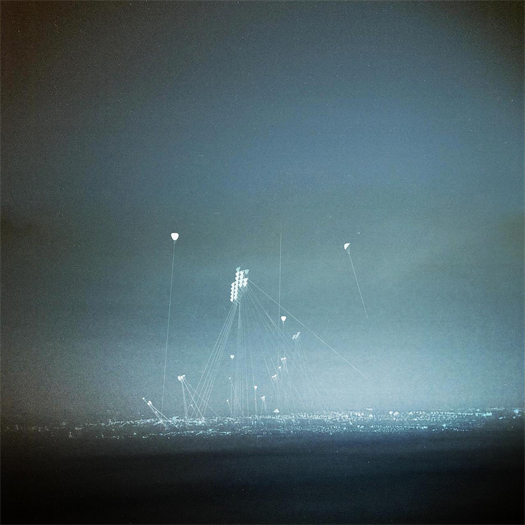
In this context and the context of this year's workshop dealing with 'bankruptcy of architecture' we may throw a retrospective look to Antonioni's film of 1970 "Zabriskie point"; its final scene presents a building in the desert exploding together with an explosion of everyday life objects and furniture. In this 'dream' of destruction one can trace the concerns and anxieties of the time and the rising theoretical and social critique to western modernism. The sequence of the described explosion can have an exemplary treatment, dealing with some concepts, presented in the studio. A main concern has to do with the question of the origin of the explosion mechanism. We can detect in this procedure a double situation constituted by a unity and a multiplicity or a plethora. We suggest that the triple elaboration of this fragment has to do with different concepts concerning the bankruptcy rationale:


1. a reversed playback of the last scene that goes from chaos to unity, from ruins and fragments to complete and whole buildings and objects; an end of the bankruptcy rationale would be a reconstitution of a unity.


2. fragments floating… chaotic dispersion, population of fragments, never forming any unity; the bankruptcy operates as a catalyst for the breakdown of any possible unit.


3. short and framed extracts highlighting cycles of unity and destruction in endless loops; unity and fragmentation are exchanging roles, unification of system values follow deconstruction of them in an endless scheme.


We may suggest that the time of crises and the bankruptcy of the post-war social and economical system the film represents the desire for change and utopian thinking. The three distorted remakes of this final scene are operated in order to rehandle the concept of bankruptcy today. Chaos to unity, fragmentation and population, dispersion and unification.

24.8.10

The discussion between D. Dimitriadis and A. Antonas


See videos from the discussion here

Recommended reading | Paper Architecture, Emerging Urbanism


Continuos Monument by Superstudio

I just came back with lots of energy and ideas from the first phase of the KAM Workshop the Bankruptcy of Architecture. It was interesting to hear to all the students statements, while the mid presentations on Sunday 22th, about the meaning and ideas of the motto "the Bankruptcy of Architecture".

This morning while taking a look to some webs, this article appeared and I think it's worth reading. Just take a look at some concepts exposed:
The current economic downturn has impacted the building industry and architecture profession more severely than many other market sectors [...] As early as November 2008, when many firms were first jolted by a sudden downturn, John McMorrough, an assistant professor and director of the graduate program in architecture at Ohio State, gave an informal lecture at Northeastern University that sought analogies between the current economic situation and the deep recession in the mid-1970s.

In a recent issue of Architectural Record, James Murdock asked the question more directly: “Will we see a new generation of "paper architects" — the archetypal figure from the last recession?

La Ville Spatiale, Yona Friedman

In 1980, British architect Ron Herron had this vision for a new Congress Hall conference center for Berlin.

Tim Love tries to answer with his article, some important questions about the kind of agendas that the new generation of architects should raise. And he wrote:
One especially promising approach will be to re-embed architecture, as a discipline, within important emerging ideas about the future of urbanism and the existing realities of the contemporary city. For the discipline of architecture, as articulated in the schools, has long had an ambivalent relationship to these realities. Most architecture curricula are untethered to relevant urban issues, and most do not integrate studio pedagogy within the broader intellectual framework of the city and do not include an urban design studio in the course sequence.
So, after the mid-presentations that where mostly focused in terms like "public space" "materials re-use" and "mobility" among others, it's a good task to take a moment to read Love's reflections on this issue. As he said:
For this framework to flourish, design speculation will need to focus on the cultural and social implications of re-imagined building types and potential urbanisms rather than on their economic and functional performance.
The complete article at the Design Observer
-----
All images and its original sources can be seen at our Tumblr archive, here

21.8.10

What to do when there is nothing to do | mammoth


Rob Holmes and Stephen Becker form mammoth recently published an interview with Lola Sheppard and Mason White from Latteral Office, and we found there some interesting thouths to share:

Mason White pointed
We were asked recently if we were a “trans-disciplinary practice,” and although it would be convenient to say yes–and likely with much evidence in the work–I think our preferred answer is that we are anti-disciplinary … or maybe un-disciplinary. The only time I would say being undisciplined is intentional and productive.

[...]

But over time, our position has solidified more as a specialization on phenomenon and opportunities that is between categories and disciplines. For example, I still think the most important magazine to subscribe to as an architect is the Economist, not Wallpaper. Reading the Economist as an architect, you can see things before they become relevant in architecture, with Wallpaper or Dwell you are seeing it after the fact, as a trend.


And Sheppard adds:
In most cases the economic and ecologic proposals we are leveraging are common, even proven models, such as job creation or remediation. Maybe what makes them unique for us is that they can be positioned in tandem rather than as oppositions.
Read the complete interview here.

17.8.10

http://en.wikipedia.org/wiki/Bankruptcy

“Bankruptcy is a legally declared inability or impairment of ability of an individual or organization to pay its creditors.” (From Wikipedia)
Bankruptcy is understood as the moment when an economical system declares its inability of sustaining it self and enters another cycle of operation promoting, often radical, measures of restructuring. Can we think of bankruptcy not in terms of failure or collapse -due to past choices- or in terms of utopian and idealized possibilities but as another set of operations that call for a different kind of economy? Or can the processes of restructuring anticipate a new kind of architecture?

The crisis condition

///In this year’s “Bankruptcy of Architecture”, the workshop will investigate the local conditions as a particular moment of a financial crisis. Can the crisis determine some strategies for architecture? The particular Greek moment takes an emblematic form: a positive, constructive look to this bankrupted world we built is needed. At the contrary some very strong concepts need to be redefined, such the concept of “nature” or the “politics of reuse”. Some changes of the value systems have to be taken under consideration for the function of a workshop that always related art to architecture through theoretical investigation.

The Bankruptcy of Architecture


The Center of Mediterranean Architecture (KAM) is pleased to introduce the new thematic field of investigation for its Summer Workshops Program. The program will bring together some selected professors and students of architecture and fine arts schools for an intensive 10-day studio work that will be focused on the specific theme: the Bankruptcy of Architecture. The sophistication of a poor architecture (that reuses existing material) meets the art tradition of the “ready- ade” and of the found object (“objet trouvé”). The thematic field is proposed to be examined through two different aspects, in two different proposed sites that include an urban area and an independent sustainable residence. The works of the summer workshops will take place in the Venetian Arsenal of Chania, Crete.